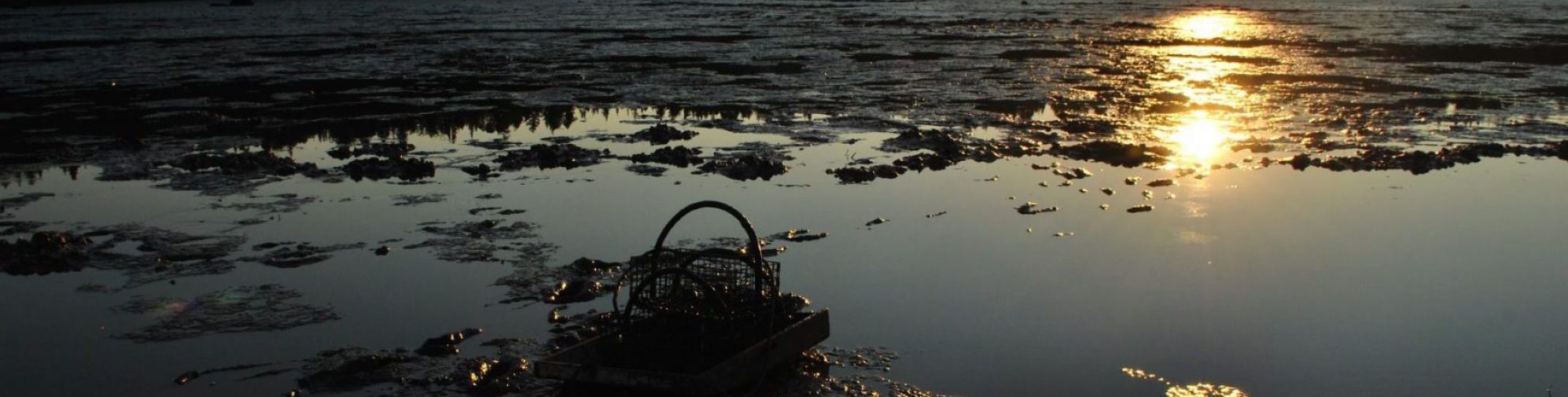
Preserving access to the coast is a key concern for harvesters and communities who are losing access to the intertidal. Historically, informal agreements between coastal property owners and harvesters, as well as community understanding, ensured that clammers had access to the shore. Sea level rise, coastal development, and changing waterfront property owners are creating barriers to access and challenging these longstanding agreements.
Across the Maine coast, various efforts are underway to preserve, protect, and expand access to intertidal fisheries. For example, volunteers with the Gouldsboro Shore project distribute information about intertidal access to new coastal property owners, host community events for the public to engage with the shellfish fishery, and are mapping critical access points. The Casco Bay Regional Shellfish Working Group published a guide to ‘Preserving Access to the Intertidal’ that details potential strategies communities can use to address a range of access related issues.
The 2023 Shellfish Focus Day included a panel on access in wild intertidal shellfish fisheries. The panel convened communities from along the coast to share how they are losing access and how they are working to protect access. After the panel, an oyster farmer, wild clam harvester, and realtor interested in continuing the conversation organized a follow-up meeting in Brunswick. The meeting was attended by clammers, attorneys, realtors, town staff, state representatives, nonprofits, state employees, the Maine Coastal Program, and the Maine Coast Fishermen’s Association.
The group, which has formally become the Coastal Access Strategy Exchange (CASE), has started meeting regularly to share information on existing access work, offer support and expertise, and strategize new initiatives. “It’s amazing who showed up to that [first meeting], and who has continued to be brought in…and that people are still showing up,” says Jessica Joyce, who helps coordinate the group.
CASE members have been discussing strategies to preserve working waterfront access. These strategies include realtor outreach and education, new coastal landowner outreach, defining working waterfront metrics, revisions to the current land use program for working waterfront, and identifying funding opportunities to protect working waterfronts. The group is an incubator of ideas, and is seeking opportunities for cross-pollination with other organizations that are also working to preserve and protect access to the intertidal.
CASE GOALS
- Increase funding and capacity for working waterfront preservation, expansion, and adaptation.
- Develop working waterfront metrics that incorporate social and cultural values.
- Preserve harvester access to the intertidal mudflats.
- Identify State level policy solutions around coastal access and working waterfront.
- Improve communication and awareness of working waterfront among CASE members, other stakeholders, members of coastal communities, coastal property owners, land trusts, and the public at large.
resources
Preserving Access to the Intertidal
“Creating More Access to the Coast,” Maine Coast Heritage Trust
 The Mudflat